
Last Updated: November 12, 2026
Quick Summary
White label grilling products are wood chunks, planks, and accessories made by one manufacturer and sold under a retailer's own brand. They let retailers launch a grilling line quickly with lower startup risk, a broad product range, and little or no inventory exposure.
- Start with three to five consumable SKUs that customers reorder.
- Model the full landed cost, including freight, packaging, and returns, not just the wholesale price.
- Ask suppliers for MOQs per SKU, separate production and transit lead times, and defect support terms.
- Place peak-season orders early, since suppliers book production capacity ahead of the season.
- Confirm labeling requirements with qualified counsel and verify supplier packaging meets retail partner rules.
Table of Contents
- What White Label Grilling Products Are and How They Work
- White Label vs. Private Label: Which Model Fits a Grilling Retailer?
- Core Benefits of White Label Grilling Products
- Profitable White Label Products to Consider for a Grilling Line
- How White Label Dropshipping Works for Grilling Accessories
- Challenges, Costs, and How to Choose a White Label Grilling Supplier
- Launching Your Own Branded Grilling Line With Flame Grilling Products
- Frequently Asked Questions
What White Label Grilling Products Are and How They Work
White label grilling products are wood chunks, planks, and accessories made by one manufacturer and sold under a retailer's own brand name. The retailer adds its logo, packaging, and labeling, and the product is sold as its own. PLMA's 2026 Private Label Report shows that store-branded products now reach most households, which is why the model has become so common across retail.
The process is simpler than building a line from scratch. The manufacturer already has the wood sourcing, drying, cutting, and packing in place. The retailer chooses the products, applies its branding, and sells them.
White Label vs. Private Label: Which Model Fits a Grilling Retailer?
The two terms are often used interchangeably, but they describe different levels of ownership. A private label product is typically developed or specified by the retailer, while a white label product is an existing manufacturer's item rebranded for resale. White label usually carries a lower entry cost and faster launch. Private label offers more control over the final product but requires more investment.
For most grilling retailers testing demand, white label is the practical starting point. A retailer with an established customer base and capital for custom development may later move toward private label for its strongest sellers.
Core Benefits of White Label Grilling Products
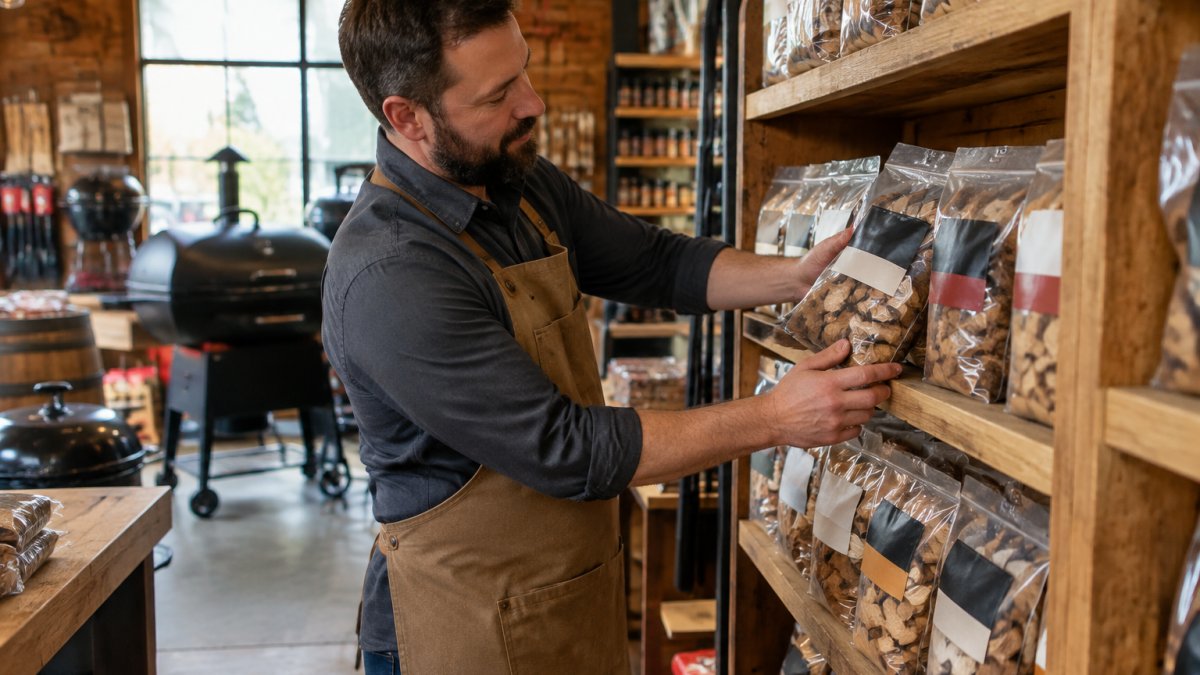
The main advantages come down to speed, risk, and range. A retailer does not have to fund production runs, source raw materials, or build a factory relationship before selling its first unit.
Faster Time to Market and Lower Startup Risk
Startup risk drops as well. A retailer can test a few products, see what sells, and expand only the items that perform. If a product underperforms, the financial exposure is limited to a small order rather than a full custom production run.
Product Range Without Inventory Exposure
A white label program lets a retailer offer a broad catalog without buying large stock quantities up front. Drop shipping models take this further: the retailer lists products and the supplier ships each order directly to the customer. A retailer can then offer a wide selection of smoking woods, planks, and accessories while holding little or no inventory.
The main advantages of a white label line come down to speed, risk, and range, as summarised below.
| Benefit | What it means | Key point |
|---|---|---|
| Faster time to market | No need to fund production runs or build a factory relationship first | Start selling sooner |
| Lower startup risk | Test a few products and expand only what sells | Exposure limited to a small order |
| Product range | Broad catalog without buying large stock quantities | Drop shipping holds little or no inventory |
Profitable White Label Products to Consider for a Grilling Line
The strongest candidates tend to be consumable items that customers reorder, because repeat purchase is what makes a white label line profitable over time. Beyond that general rule, the grilling category has specific product types and use cases worth building around.
Consumables That Drive Reorders
- Smoking wood chunks and chips, pitmasters and home grillers go through them regularly, and different species appeal to different cooks.
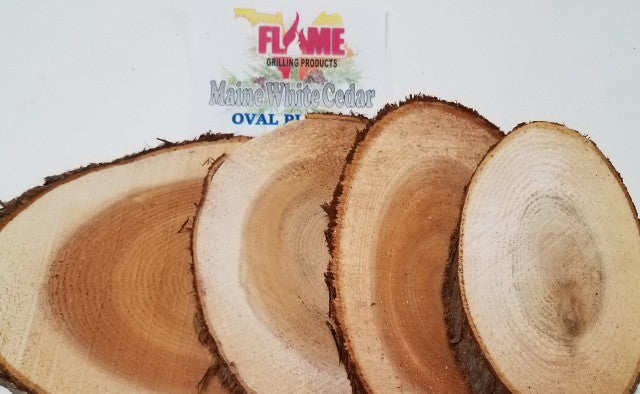
- Cedar and alder grilling planks, offered in multiple sizes so a retailer can cover both casual and serious cooks. Our Northern White Cedar Rectangle Grilling Planks 6x12 30 Count are a good example of a multipack that suits retailers building a grilling line.
Accessories That Broaden the Basket
Accessories such as grill brushes, seasoning sets, and cooking tools broaden the basket and raise average order value. Choose products that fit your customer base and that you can present with clear, consistent branding. Browse our cedar planks to see a concrete product to stock.
How to Differentiate a Shared-Base Product
Because a white label product is available to other retailers, differentiation has to come from what you add around it. Concrete levers include:
A Simple Product-Selection Framework
Start with three to five SKUs that meet four tests: they are consumable or frequently replaced, they ship without excessive damage risk, they can be branded clearly, and they have a plausible path to a healthy margin after the full landed cost. Test the line for a season, keep the SKUs that reorder, and expand only those. This keeps your initial inventory exposure small while giving you real data on what your customers want.
How White Label Dropshipping Works for Grilling Accessories
In a dropship arrangement, the retailer sells a product on its own website and passes the order to the supplier, who packs and ships it under the retailer's brand. The retailer never touches the stock. Margin comes from the difference between the wholesale price and the retail price.
Customers often want to understand how a product is used before they buy. For example, What Is The Best Way To Use Cedar Grilling Planks offers practical guidance a retailer can point shoppers toward, which can reduce returns and support sales.
Challenges, Costs, and How to Choose a White Label Grilling Supplier
White label carries real trade-offs. Margins can be thinner than with a fully private product, and a supplier may sell similar items to other retailers, which limits differentiation. DSCP Smart Fulfillment notes that white labeling lets businesses build a branded line without manufacturing from scratch, but the retailer still needs to stand out on branding and service.
The Real Cost Stack for a White Label Grilling Line
Most retailers underestimate the full landed cost. The wholesale unit price is only the starting point. Build your model around these layers:
- Wholesale unit cost, what the supplier charges per unit before freight.
- Freight and inbound logistics, pallet or parcel cost from the supplier to your warehouse or 3PL. Wood products are bulky and relatively heavy, so freight is rarely trivial.
- Duties and fees, if any portion of the supply chain crosses a border, confirm the applicable tariff treatment with your customs broker before you commit to a retail price.
- Packaging and branding, printed cartons, labels, inserts, and any UPC or retail-ready requirements. Custom packaging usually carries a setup charge and a minimum print run.
- Retailer margin, if you sell through a retail partner, plan for their margin on top of your cost. If you sell direct, plan for payment processing, platform fees, and ad spend instead.
- Returns and replacements, grilling wood and planks can arrive damaged, damp, or out of spec. Budget a returns allowance rather than assuming zero.
A common pattern is that the wholesale price represents only a portion of the true landed cost. Model every layer before you set a retail price, and stress-test the model at a lower-than-expected sell-through rate.
Supplier Evaluation Checklist for Grilling Products
Ask every candidate supplier the same questions and compare answers side by side:
- Manufacturing capability, can the supplier document its sourcing, drying, cutting, and packing steps?
- Materials and species, confirm the exact wood species, grade, and any food-contact suitability claims. For planks, ask about food-safe sourcing and whether the supplier can provide documentation.
- Quality systems, ask whether the supplier operates under a documented quality process and whether it can share references from other retail customers.
- Minimum order quantities (MOQs), get MOQs per SKU, not just per order. A low total MOQ can still hide a high per-SKU minimum that forces you into too many units of a slow seller.
- Lead times, ask for production lead time and transit time separately. A supplier that quotes a single number is hiding the variability that matters most during peak season.
- Warranty and defect support, confirm who absorbs the cost of defective or damaged units and how claims are handled.
- Packaging capability, can the supplier apply your branding, or do you need a separate packaging vendor? Ask about print setup fees and minimum print quantities.
Watch out: a supplier that cannot explain its moisture-control process in specific terms is a quality risk you will discover only after your customers do.
Compliance, Labeling, and Liability
Grilling products that contact food, planks, wood chunks, and some tools, raise labeling and liability questions. Consult qualified counsel on the labeling your product requires. Do not assume a supplier's existing packaging meets your retail partner's requirements; verify it.
Seasonality and Inventory Planning
Grilling demand is seasonal in most of the country, and white label inventory planning has to account for it. A common pattern is to place peak-season orders well before the season starts, because suppliers book production capacity early and freight slows during high-volume periods. Forecast conservatively for your first season, keep a small buffer on your best-selling SKUs, and plan a clear path for carrying unsold inventory into the next season. Wood products store well if kept dry, which gives you more flexibility than perishable categories, but only if your storage is genuinely moisture-controlled.
Choosing Between Suppliers
Look for evidence that a supplier can keep up with demand during peak season. A reliable partner will explain its fulfillment process clearly and give you references you can verify. Price matters, but consistent quality and fast shipping matter more to repeat buyers than the lowest unit price.
Launching Your Own Branded Grilling Line With Flame Grilling Products
Start with a short list of three to five products, a clear brand identity, and a test budget. Confirm supplier terms, order samples, and check how the packaging will look to your customers before you go live.
If you want your own brand on grilling woods and accessories, our [Private Label Program | flamegrillingproducts.com] is built for that. Send us your logo and the products you want under your brand, and we produce the artwork for you free of charge. The program costs $500.00, and we send the specs and supplier details you need to make the line happen. Contact Dorie for more information.
Frequently Asked Questions
What are the benefits of white labeling for grilling retailers?
White labeling lets a grilling retailer sell wood, rubs, and accessories under its own brand without building a manufacturing operation. The main benefits are a branded catalog and the ability to test demand for new items before committing capital. Retailers should confirm what they can customize before signing an agreement.
Is white label better than private label for a BBQ retailer?
White label usually suits a retailer that wants to start quickly and test products with little capital, because the supplier already makes the items and the retailer adds its own branding. Private label gives more control over formulation and sourcing, but it requires more investment and longer development. Many specialty grilling stores use white label for accessories and wood blends, then move proven sellers to private label once demand is clear. The right choice depends on budget, timeline, and how much product differentiation the store needs.
What are the disadvantages of white label grilling products?
The main drawback is limited differentiation, since the same supplier may sell a similar product to other retailers. Margins can also be tighter than with private label goods, which often command higher prices. Retailers depend on the supplier for quality, lead times, and consistency, so a weak supplier can damage the brand. Product customization is usually limited to packaging and labels. Retailers should compare these trade-offs against faster launch speed and lower upfront risk before choosing this model.
How does white label dropshipping work for grilling accessories?
In a white label dropshipping model, the retailer lists grilling products on its website under its own brand. When a customer orders, the retailer passes the order to the supplier, which ships the product directly to the customer.
How can a retailer choose a white label grilling supplier?
Start by asking a candidate supplier for clear product information and its terms before committing to a line.
Which white label grilling products are most profitable?
Profitability tends to be highest for consumable items that customers reorder. Retailers should calculate unit economics including product cost, shipping, packaging, and expected returns before choosing a category. Testing a small set of SKUs first helps identify which products actually sell in the retailer's market.
