

Table of Contents
- Wood Chunks vs Chips: The Core Differences Beginners Need to Know
- How to Use Wood Chunks in a Charcoal Grill
- Smoking Wood Duration Guide: How Long Each Type Lasts
- Best Wood for Smoking Brisket
- Common Beginner Mistakes With Wood Chunks and Chips
- Sourcing Fresh Wood and What to Look For
- Frequently Asked Questions
Last Updated: September 30, 2026
Wood Chunks vs Chips: The Core Differences Beginners Need to Know
Choosing between wood chunks vs chips is the first real decision a new pitmaster faces, and it shapes everything that follows: burn time, smoke intensity, and how often you open the lid. At Flame Grilling Products, we've supplied fresh-cut smoking wood since 2001, and the questions we hear most often come down to this single comparison.
Wood chunks are fist-sized pieces of split hardwood, typically 2 to 4 inches across. Wood chips are small, thumbnail-sized shavings sold in bags. That size gap drives every practical difference between them.
Size, Burn Time, and Smoke Output Compared
Chunks burn slowly and produce steady smoke for 45 minutes to over an hour per piece. Chips ignite fast, throw heavy smoke for 15 to 20 minutes, then burn out.
That difference matters more than most beginners expect. Chips give you a quick smoke burst, which suits short cooks like chicken breasts or fish fillets. Chunks deliver the long, even smoke that ribs, pork shoulder, and brisket need.
| Factor | Wood Chunks | Wood Chips |
|---|---|---|
| Typical size | 2-4 inches | Thumbnail-sized |
| Burn time | 45-60+ minutes | 15-20 minutes |
| Smoke output | Steady, moderate | Fast, heavy burst |
| Best for | Long cooks (brisket, pork butt) | Short cooks (fish, chicken) |
| Refill frequency | Low | High |
When to Choose Chunks and When to Choose Chips
Pick chunks for anything running longer than an hour. The USDA Food Safety and Inspection Service guide to safe minimum cooking temperatures notes that large cuts like brisket and pork shoulder require extended cooking to reach safe internal temperatures, and chunks match that timeline without constant tending.
Choose chips when you want fast smoke on a quick cook, or when you're using a gas grill with a smoker box. Chips also work well for adding a light smoke finish to vegetables.
How to Use Wood Chunks in a Charcoal Grill
Learning how to use wood chunks in a charcoal grill comes down to placement and airflow. Get those two right and you'll hold steady smoke for hours without babysitting the fire.
Placement and Lighting for Consistent Smoke
Set up a two-zone fire first. Pile lit coals on one side and leave the other side empty for indirect cooking.
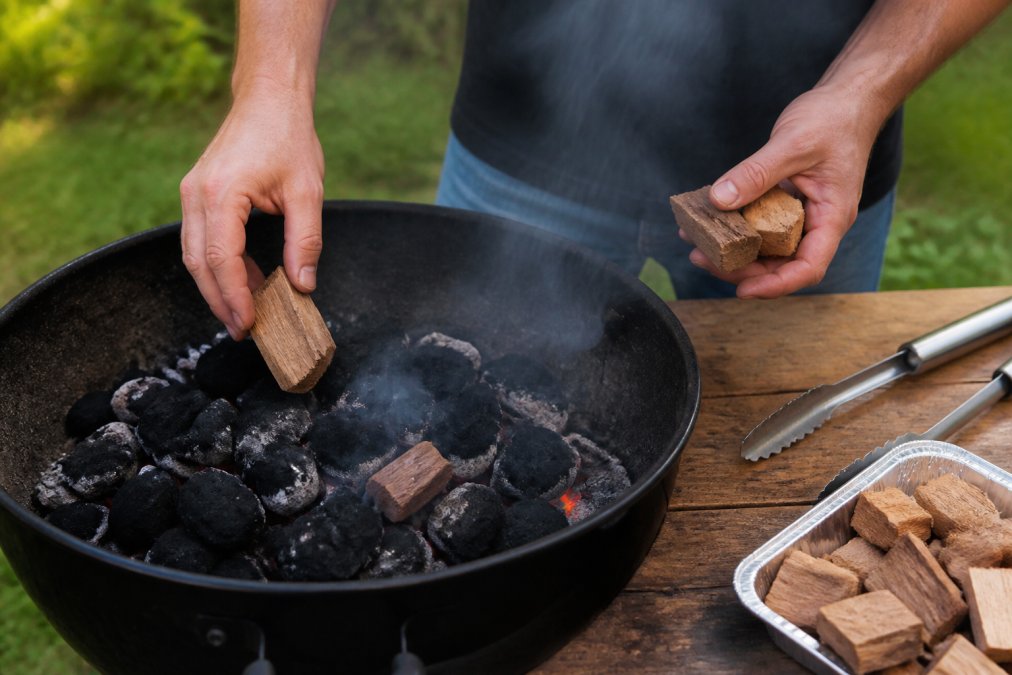
Then nestle 3 to 5 chunks directly onto the hot coals, spaced a few inches apart. Don't bury them. Air needs to reach the wood so it smolders rather than flares.
- Use the vents to control temperature, not the wood
- Add fresh chunks only when smoke thins out
- Keep the lid closed as much as possible
Expected result: thin, blue-gray smoke within 10 minutes and a steady stream for the next hour.
Smoking Wood Duration Guide: How Long Each Type Lasts
A smoking wood duration guide saves you from the two worst beginner outcomes: running out of smoke mid-cook, or choking the meat with bitter creosote.
As a working rule, one chunk smolders for about 45 to 60 minutes. One handful of chips lasts 15 to 20 minutes. Plan your refills around those numbers.
For a 12-hour brisket, that means roughly 12 to 15 chunks total, added in small batches every 60 to 90 minutes. For a 2-hour chicken cook, 2 chunks or one foil packet of chips is plenty.
Best Wood for Smoking Brisket
The best wood for smoking brisket is a mild hardwood that complements beef without overpowering it. Oak, hickory, and pecan top most pitmasters' lists.
Oak is the classic choice, it burns clean and long with a balanced, slightly sweet smoke. Hickory brings a stronger, bacon-like flavor that some cooks find too bold for a long cook. Pecan sits between the two: nutty, rich, and forgiving.
Avoid mesquite for brisket unless you like an aggressive bite. It works better on quick-cooking steaks.
Chunks or Chips for a 12-Hour Brisket Cook
Chunks win this one, and it isn't close. A 12-hour cook with chips would mean refilling every 20 minutes, which means opening the lid constantly and losing heat.
Use 4 to 6 chunks to start, then add 2 to 3 more each time the smoke thins. Fruit woods like apple or cherry also work well here if you want a sweeter finish.
Common Beginner Mistakes With Wood Chunks and Chips
Most early failures trace back to a handful of repeat errors, not bad luck. Here are the ones we see most.
- Soaking chunks. Chunks don't need soaking and wet wood smolders unevenly.
- Using too much wood. More wood doesn't mean more flavor. It means bitter meat.
- Adding wood to a cold fire. Wait for hot coals, or the wood just smolders and stalls.
- Mixing too many wood types. Pick one and learn it before blending.
- Forgetting airflow. A closed-off fire produces thick smoke and off flavors.
Sourcing Fresh Wood and What to Look For
Freshness separates good smoking wood from the dusty bags sitting on clearance shelves. Dry, properly seasoned wood gives you clean smoke. Old or moldy wood gives you a headache.
Look for wood with visible grain, a light natural color, and a clean, woodsy smell. Avoid pieces with mold, heavy bark rot, or a damp feel.
The US Forest Service guide to firewood and wood moisture explains that properly seasoned wood has a much lower moisture content than green wood, which is why it burns cleaner and smokes better. For smoking, you want wood in that seasoned range, not freshly cut and not bone-dry.
At Flame Grilling Products, we harvest from family farm wood lots and ship fresh rather than warehousing for months. If you're a retailer or private label brand, our drop ship program lets you offer that same fresh wood without holding inventory.
The hardest part of smoking isn't the meat, it's keeping consistent smoke for hours without babysitting the fire. Flame Grilling Products supplies fresh-cut, sustainably sourced chunks and chips so you spend less time managing wood and more time cooking. Our family-owned operation has run since 2001, and our drop ship program means no inventory to manage and no shipping logistics to handle. Get started with Flame Grilling Products and give your customers wood that actually smokes the way it should.
Frequently Asked Questions
Do you soak wood chips or chunks before smoking?
Soaking is a common beginner habit, but it does not help much. Wet wood has to dry out before it produces smoke, which delays the smoke and can create steam instead. For wood chunks vs chips, both work better dry. If you want a slower start with chips, use a foil packet with a few holes rather than soaking. Dry wood gives you cleaner, more predictable smoke from the start.
Which lasts longer: wood chips or wood chunks?
Chunks last significantly longer. A chunk the size of your fist can produce smoke for 45 to 90 minutes depending on your grill temperature and airflow. Chips typically burn through in 15 to 30 minutes. For long cooks like brisket or pork butt, chunks are the practical choice because you are not refilling every half hour. Chips suit short sessions such as burgers, chicken breasts, or a quick fish fillet.
Can I use wood chunks in a gas grill?
You can, but you need a smoker box or foil pouch. Place chunks in a metal smoker box set directly over a burner on medium heat. Once they begin smoking, turn the burner down to low. Chips work slightly better in gas grills because they start smoking faster at lower temperatures. Chunks still work if you give them enough time to ignite. Never place bare chunks on gas grill grates or flavorizer bars.
How do I choose the right wood for smoking brisket?
Brisket takes well to medium-strength woods that complement beef without overpowering it. Oak, hickory, and pecan are the most common choices. Oak gives a balanced, steady smoke. Hickory is stronger and classic for Texas-style brisket. Pecan sits between the two with a slightly sweeter note. Fruit woods like apple or cherry work for a milder result. For more detail, see our best wood for smoking brisket section above.